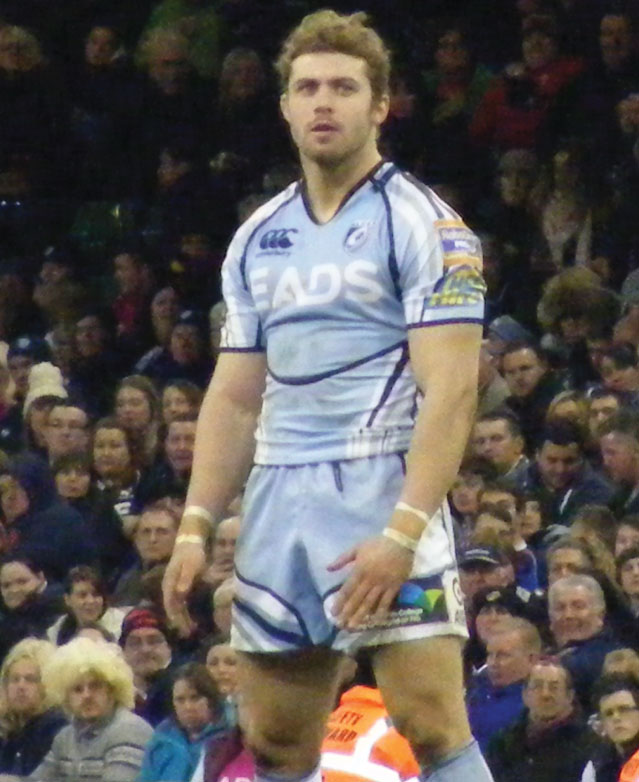
Part of the Tight Five, Props pretty much consider themselves the cornerstone of the game and one of the three most important players on the pitch (well the most important, but who’s going to argue?).
In their up-front position, they’re the BIG guys. Often described as Neanderthal, big, ugly and sporting nicknames such as ‘Tank’, ‘Nutter’, and ‘Rhino’, they are more animal than man. A prop should be packing plenty of muscle and look fierce. Ex-military is always a bonus.
You don’t want to spill a Prop’s pint or look them in the eye.
Technically the Prop props up the Hooker and keeps the Scrum stable. Their aim is to keep the scrum stable so that the ball can be fed backwards for the Scrum-Half to pick up. Or, if the other team has ball possession, then it’s their job to destabilise the scrum so that the opposition can’t control the ball. Props lift the Locks in Lineout and generally have to carry the ball forward through the strongest opposition. Props should never try to kick the ball for fear of looking stupid.
The Tighthead Prop is found on the right and the Loosehead on the left.
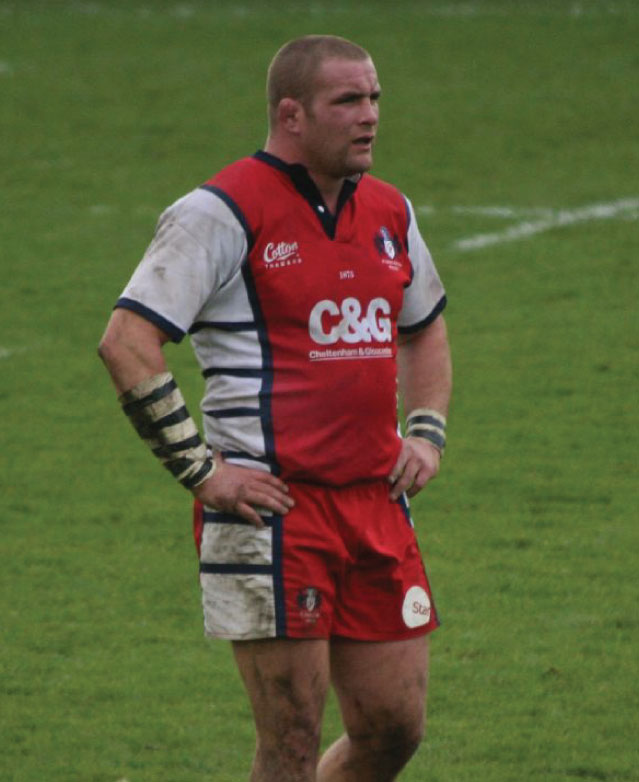
Phil Vickery
To be a Hooker, you have to have a ludicrously high pain threshold. Slap, bang and up-front centre, these players are the leaders of the forward pack. Where a Prop is wide and Neanderthal, a Hooker has to be agile and have great co-ordination. Size is compensated for with aggression (being psychopathic is a bonus).
In the Scrum, a Hooker is propped on either side by the Props. The Hooker’s primary aim is to hook the ball with their feet and send it backwards (position names are not rocket science). In Lineout, the Hooker must Throw-in the ball from the Sideline. For this, they must have good co-ordination and communication skills or risk being graciously reminded by their own teammates’ fists in the changing room later.
Never try to crack the joke about Hookers and too much make-up/short skirts.
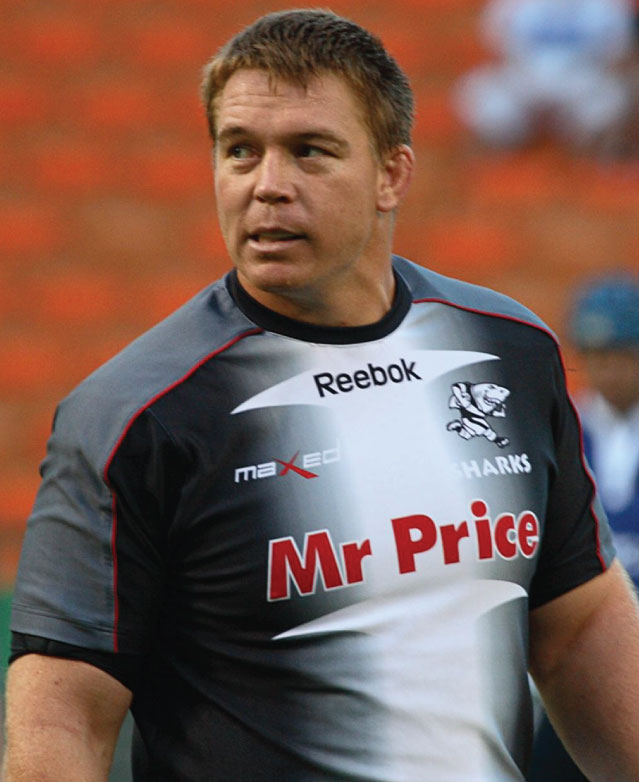
JOHN SMIT
Locks are the giants of the field. Not only do these one-time basketball players need strength, they also have to be agile and good ball players. They are the workhorses of the pack and are the engine room that ensures the scrum doesn’t collapse, by pushing forward and locking the Tight Five together. Strong enough so they don’t snap in half.
Locks are key players in Lineouts, using their height to grab the ball, given a bunk up by the Props. Acting skills are a bonus, so that they can fake their jumps better than an extra from a House of Pain video, when waiting for a ball throw-in during the lineout.
The only downside to being a Lock, is that you are so tall that all your mistakes can be seen on endless replays. Locks are also the players most likely to wear a head guard or head tape, to stop their ears being ripped off and perhaps most importantly, to look tough.
MARTIN JOHNSON

The Flankers are part of the Three Musketeers along with the Number Eight and work tightly as a ferociously competitive team. Flankers must be superior at tackling, ball handling and also be agile and fast. Always tussling and wrestling for the ball in turnovers and trying not to raise attention to the referee
The Flankers’ aim is to detach from the side of the Scrum as soon as the ball comes out and stop the opposition attacking down the side of the scrum. The difference between an Openside and Blindside Flanker has become more profound over the years.
Blindside (closest to the Sideline) is where the opposition tend to attack from a scrum so the Flanker on that side has to be a strong defender and should be ready to spend plenty of time face down, being stamped on at the bottom of a Ruck. The Blindside Flanker is a wannabe Lock who isn’t quite big enough.
The Openside Flanker, being on the open side with more space to operate, has to be faster and is generally smaller with more pitch to cover. Constantly in motion, these players don’t stand still very much except in front of the mirror in the dressing room.
Flankers are the players most likely to give fouls but often win the matches.
RITCHIE McCAW
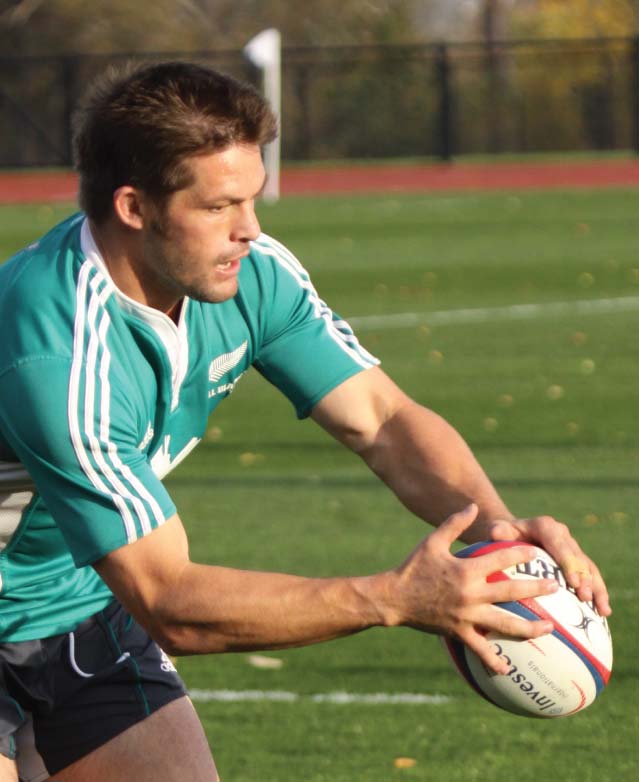
The Number Eight has the most creative and inspired name on the pitch. He works closely with the Flankers as part of the Three Musketeers forming a solid competitive trio.
The Flanker role is essentially to get the ball at the back of the Scrum in a position for the Scrum-Half to grab and run. The Number Eight can also choose to grab the ball from the scrum and make a run for it, if he spots a weakness in the opposition defence and fancies his chances. Only the Scrum-Half and Number Eight can take the ball out of the scrum.
Number eight is an important position on the pitch and much of the match happens around him. He needs to be aware and always looking for an opportunity to take the ball forward. Shy players afraid of scuffed knees and broken limbs need not apply.
LAWRENCE DALLAGLIO
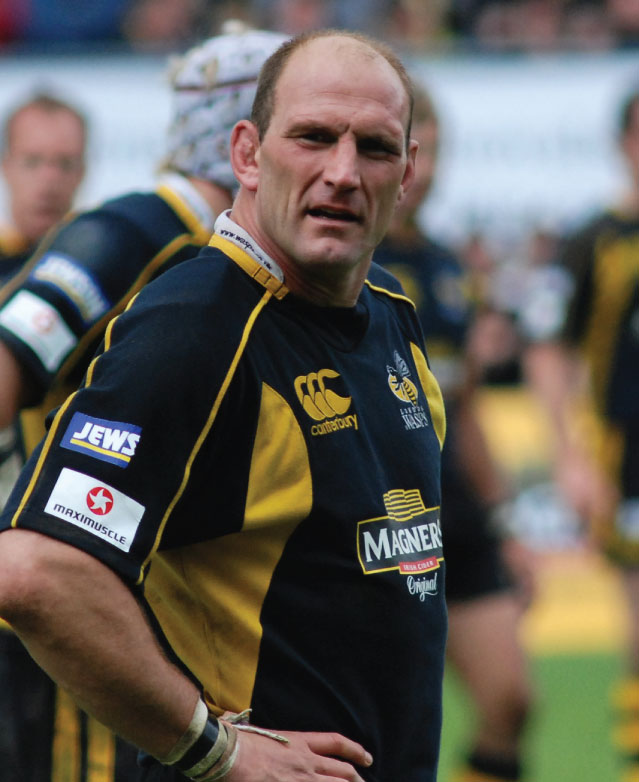
Small, quick and usually compared to a rat, the Scrum-Half is the link between the backs and forwards. They run around, snapping at player’s heels, constantly telling them what to do until the opposition can’t take any more and a fight breaks out. He is the pest of the team and doesn’t care who he upsets.
The Scrum-Half is usually the smallest player on the pitch but has the biggest mouth. They can spend 80 minutes running round a pitch whilst still managing to talk non-stop.
The Scrum-Half feeds the ball into the scrum and is one of only two players (Number Eight) who can take it out. He has to be both tough mentally and physically, taking on players twice his size and weight. Exceptional handling and passing skills are required, as are also kicking, speed, acceleration, agility and mental clarity. There’s not much that he can’t do. Being expert at building a campfire and navigating by the stars is always a bonus.
The Scrum-Half and Fly-Half work closely together and can often be seen using weird hand signals that make it obvious to everyone else that they have a cunning plan.
RUAN PIENAAR
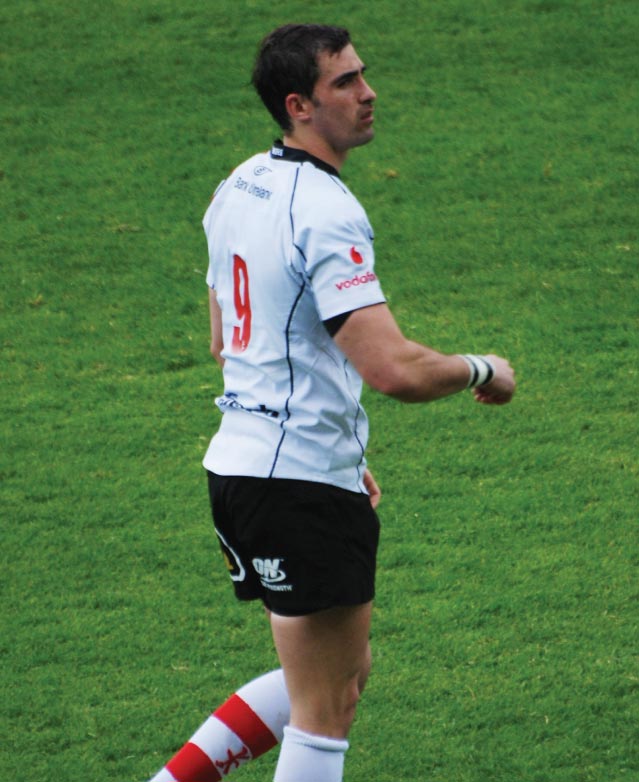
The Fly-Half is the leader of the backs, is a key and superior tactical player, has great intellect and is the chief playmaker. The Fly-Half has to be able to think under pressure and always keep a clear head. A small but fast player, his intellect offers an air of supreme confidence and authority.
The Fly-Half works closely with the Scrum-Half and usually receives the ball from the Scrum-Half fresh out of the Scrum. Using their intellect, this player must quickly assess which is the best option for play and move forward before being pummelled to the ground by a big lump of gristle and sweat.
The Fly-Half is required to be an exceptionally quick passer (God help him if he fumbles) and is also the team’s preferred kicker.
JONNY WILKINSON
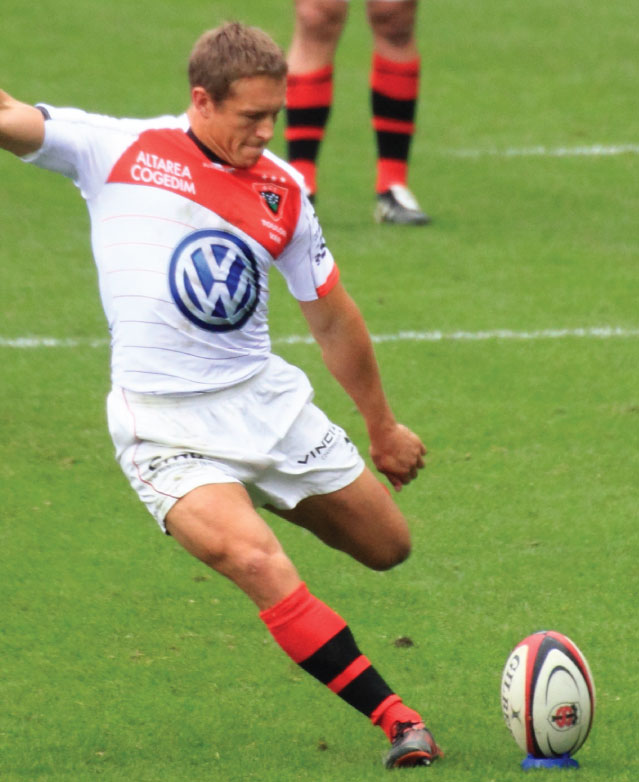
Wingers score more tries than any other player on the field. They are the glory hunters of the field and would do well to keep in mind all the blood and sweat the other teammates expend in setting them up for the finish or face being reminded later. A bit like the front man of a rock band, they usually get the attention and glory titles such as Player of the Year.
The prerequisite for a Winger is to be fast and to have no fear of internally bleeding organs. Like the Centres, they must be prepared to be steamrollered by a big ‘last chance’ opponent, who wants to stop him as if his life depended on it. Only those willing to receive hospital treatment for the team need apply. The objective of the Winger is to finish the moves the other players have set them up for, to run like the wind and to get over the try line.
Not much difference between the left and right, apart from which foot the player can kick with.
Juan José Imhoff
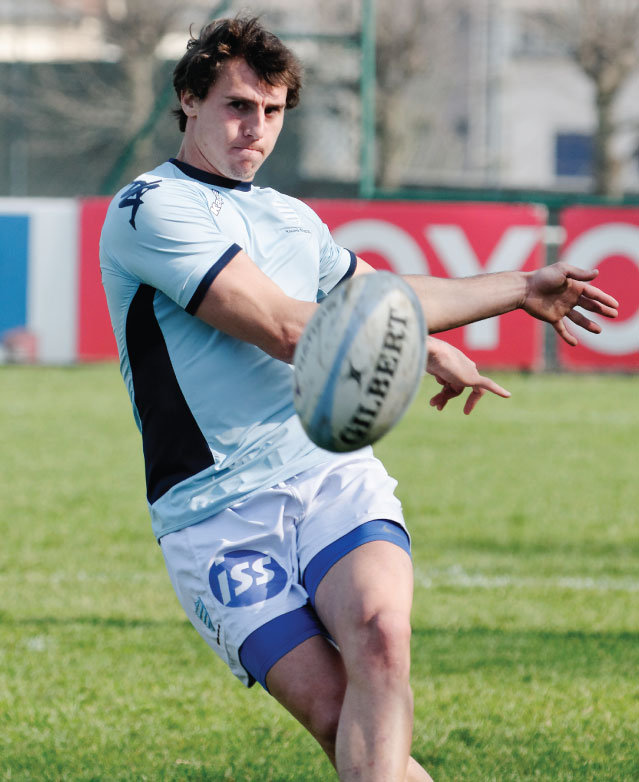
A Centre has to have exceptional handling and quick passing skills, with no room for fat fingered fumbling. Centres are a link between the Fly-Half and the Backs and their main role is to set up the Wingers for tries. Working best as a pair, there are subtle differences between outside and inside:
The Inside Centre is the bigger of the two Centres, as his tactic is taking the ball up to the defence to be tackled. With the prospect of the opposition wanting to tear him limb from limb, this player has to be tough and not afraid of being stamped on (in the spirit of the game). This player probably handles the ball more than any other on the pitch and it’s essential that he should never drop the ball or he faces a beating from his own team’s forwards after the game.
The Outside Centre is the faster Centre player. His trick is to lure the opposition towards him and then pass to a teammate (Winger) who can get through the break-in defence he has just created. He must also defend and usually faces a Fullback charging at full speed towards him, ball in hand - not unlike facing a charging rhino in the wild. The Outside Centre has to have nerves of steel and should not be afraid of grievous bodily harm or hospitals.
WESLEY FOFANA
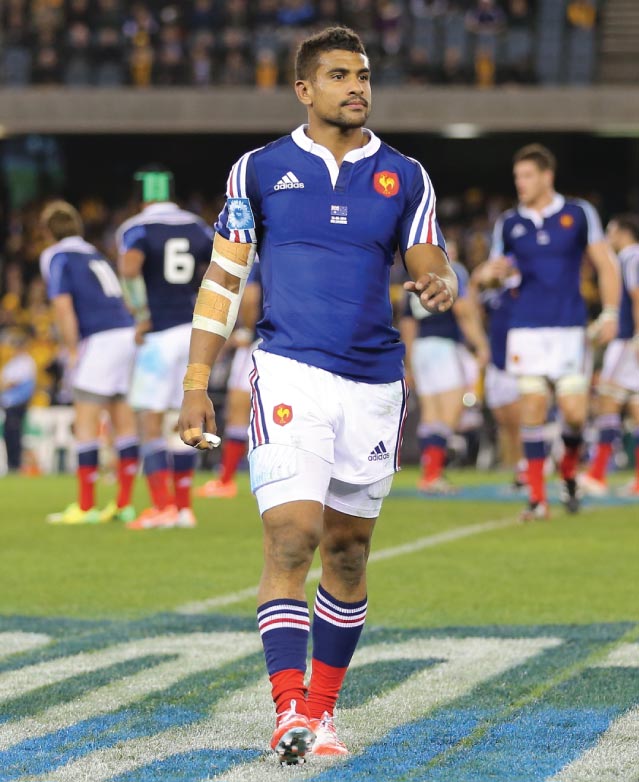
The Fullback is the last line of defence, guarding the try line and must have total disregard for his own safety. He is Mr Backup with a mantra of ‘Always be Defending’.
A good Fullback is the chess player always thinking a few moves ahead, with the ability to read the game and anticipate the direction of play. He must be explosive on acceleration and it goes without saying that this position has to be the best ball handler, to catch the GarryOwens and the Bombs being dropped by the opposition. The Fullback also has to be an outstanding kicker - to send balls back down the pitch to safety and away from their own try line.
The Fullback has much freedom to roam the pitch but usually sits behind the defensive line. He has to watch the play closely and be able to put himself in the right place at the right time to deliver.
LEIGH HALFPENNY